Alpine Mountain Passes, Winter Driving & Avalanche Safety
Live mountain pass closures, French Loi Montagne II snow tire laws, avalanche airbag transport rules, and high-altitude acclimatization.
1. Your Journey & Schedule
2. Passenger & Contact Information
Your chauffeur will meet you in arrivals with a name board. Your ride confirmation voucher is sent to this email.
3. Executive Mercedes Fleet
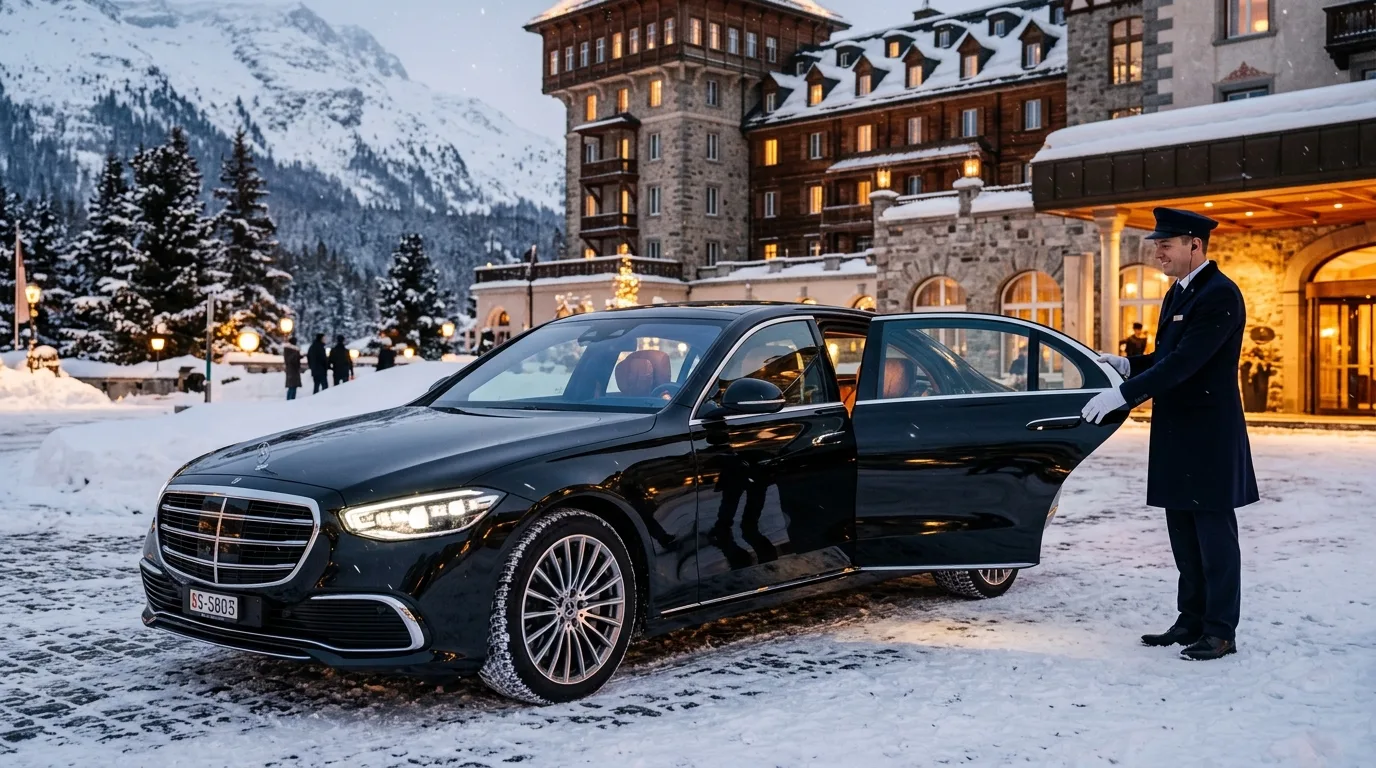
Berline
Mercedes-Benz E-Class / S-Class Luxury Sedan
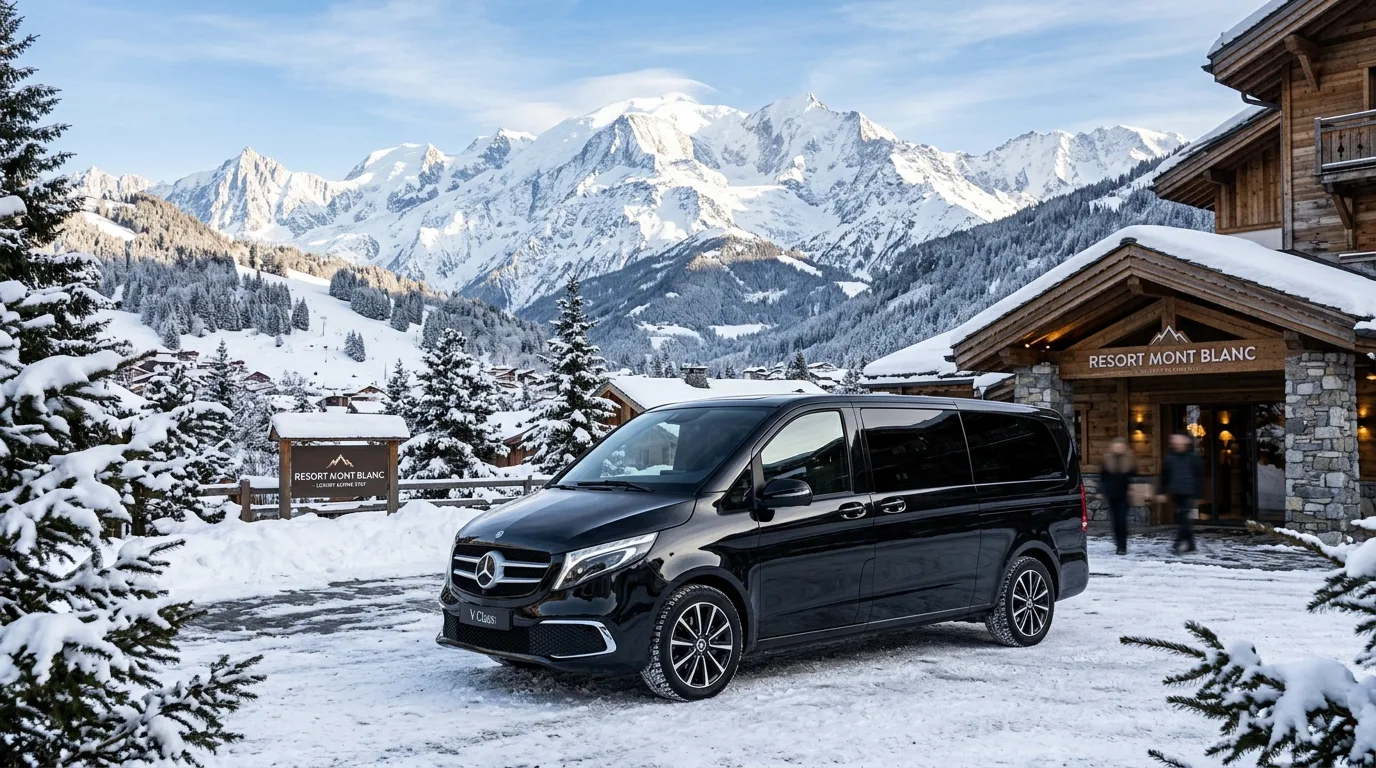
Van
Mercedes-Benz V-Class Extra-Long with extensive ski equipment capacity
Our senior dispatch desk audits flight radar, route conditions, and baggage specs.
We connect via WhatsApp or Email to confirm timings, child seats, and custom requests.
A secure custom invoice is provided to lock in your dedicated Mercedes vehicle and chauffeur.
The remaining balance is settled comfortably at your resort via cash (EUR/CHF) or card.
30% Stripe Deposit • 70% Balance on Arrival • Instant Confirmation & Guaranteed Chauffeur • Secure Stripe Payment (Card/Apple Pay/Google Pay)
Registered VTC Carrier • SIREN 813 036 472 • Official CMA Accreditation & data.gouv.fr Verification
Alpine Winter Road Status & Mountain Pass Sentinel
Live access and regulatory monitoring for primary French & Swiss alpine corridors. All Geneva Ski Transfers vehicles operate with certified 4MATIC all-wheel drive, Michelin 3PMSF winter tires, and professional mountain chauffeurs.
A40 Autoroute Blanche & Viaduc des Égratz
430 m to 1,035 mChamonix, Saint-Gervais, Argentière, Les Houches
D902 Vallée d'Aulps & Gorges du Pont du Diable
550 m to 1,800 mMorzine, Avoriaz, Les Gets
D106 Pierre Carrée Ascent & Les Carroz
500 m to 1,843 mFlaine, Les Carroz, Grand Massif
D1212 Val d'Arly & Megève Basin
580 m to 1,113 mMegève, Combloux, Saint-Gervais
N90 Tarentaise Expressway & Moûtiers Bypass
350 m to 480 mGateway to Courchevel, Val Thorens, Méribel, Tignes, Val d'Isère, Les Arcs, La Plagne
D117 Vallée des Belleville Ascent (Val Thorens)
480 m to 2,300 mVal Thorens (Highest European Resort), Les Menuires, Saint-Martin
D915 / D90 Courchevel & Méribel Alpine Ascents
480 m to 1,850 mCourchevel 1850, Courchevel 1650, Méribel Centre, Mottaret
D902 Haute-Tarentaise & Barrage de Tignes
800 m to 2,100 mTignes Le Lac, Tignes Val Claret, Val d'Isère
D119 / D221 Paradiski Serpentine Ascents
670 m to 2,000 mLes Arcs (Arc 1800 / 1950 / 2000), La Plagne (Plagne Centre / Belle Plagne)
Swiss A9 Autoroute du Rhône (Valais Corridor)
375 m to 500 mGateway to Verbier, Crans-Montana, Zermatt, Saas-Fee
Route de Verbier Ascent (Le Châble to Verbier)
820 m to 1,500 mVerbier, Medran, 4 Vallées
Route 212 / 213 Mattertal & Saastal Terminals
650 m to 1,800 mZermatt (Täsch Train Link), Saas-Fee Terminal
Route de Crans-Montana Ascent from Sierre
500 m to 1,500 mCrans, Montana, Aminona
Route 11 Pays-d'Enhaut to Gstaad (Château-d'Oex)
400 m to 1,050 mGstaad, Saanen, Rougemont
Official Alpine Winter Driving Safety Mandate
All fleet vehicles equipped with certified 3-Peak Mountain Snowflake winter tires with minimum 4mm tread depth.
Pre-fitted and tested alpine snow chains carried in every vehicle for severe mountain pass blizzards.
Never fit chains in sub-zero snow storms. Your professional chauffeur manages all traction and safety equipment.
Full VTC and commercial passenger licensing recognized by French and Swiss transport prefectures.
Off-Piste Avalanche Safety, Airbag Flight Rules & Mountain Rescue Sentinel
Venturing into alpine backcountry demands rigorous safety protocols. Review IATA airline regulations for avalanche airbags, DVA transceiver check procedures, the European danger scale, and emergency rescue channels.
Avalanche Airbag Backpack (ABS / Mammut / Alpride / BCA)
IATA Table 2.3.A Approved • Zero In-Cabin GasPermitted under IATA Table 2.3.A: 1 pack per passenger with 1 cylinder (Div 1.4S pyrotechnic < 250mg or compressed argon/nitrogen). Electronic capacitor systems (Alpride E1/E2, JetForce) carry zero gas and fly unrestricted in cabin or hold.
Carry printed manufacturer airline approval sheet; disconnect mechanical trigger handle and secure cylinder in protective pouch.
Stowed upright in Mercedes-Benz V-Class luggage bay without stacking heavy ski bags over trigger levers.
UIAGM Mountain Guide & Chauffeur Advice: Register your avalanche backpack with your airline check-in desk 14 days prior to departure from London, Manchester, or Frankfurt to prevent boarding delays.
European Avalanche Danger Scale (Levels 1 to 5)
Snowpack generally well bonded and stable throughout. Triggering possible only on isolated extreme slopes.
Unstable snow on specific steep slopes (> 30°) indicated in local bulletin. Good route selection required.
Critical danger level! 50%+ of all fatalities occur here. Persistent weak layers easily triggered by single skier.
Snowpack weakly bonded on most slopes. Remote triggering very common. Stay on open groomed pistes only.
Catastrophic avalanche cycle. Massive natural releases reaching valleys and ski resort roads. Backcountry strictly closed.
France Mountain Rescue (PGHM Chamonix)
In French Savoie/Haute-Savoie, dial 112 or direct PGHM Chamonix / CRS Alpes. Have GPS coordinates ready from SwissTopo or IGN app.
Switzerland Mountain Rescue (REGA 1414)
In Swiss Valais (Verbier, Zermatt), dial 1414 for REGA Swiss Air-Rescue or 144 for Air-Glaciers / Air Zermatt helicopter dispatch.
15-Minute Survival Window
90% of completely buried avalanche victims survive if excavated in under fifteen minutes. Search immediately with group DVA transceivers; do not wait.
Guided Backcountry Valley Rendezvous
Geneva Ski Transfers coordinates with certified UIAGM guides to drop groups at remote lift bases and collect at valley exits (e.g. Mer de Glace).
High-Altitude Acclimatization, Hydration & Mountain Sickness Guide
Ascending rapidly from Geneva Airport (430m) to high alpine resorts (up to 2,300m) challenges human physiology. Review elevation profiles, ear barotrauma prevention, hydration strategies, and our 3-day adaptation protocol.
Val Thorens Corridor (GVA 430m → 2,300m Resort Altitude)
+1,870m Elevation Gain • Europe's Highest Ski ResortLake Geneva basin (430m) via Albertville and Moûtiers, culminating in 37 mountain switchbacks to 2,300m.
Atmospheric pressure drops from 1013 hPa to ~770 hPa; oxygen saturation per breath drops by ~23%.
Gradual ascent pacing through the Tarentaise climb with optional decompression rest pause in Moûtiers.
Chauffeur & Alpine Health Advice: Avoid heavy alcohol on Night 1; drink 3 to 4 liters of water and enjoy Day 1 skiing below 2,800m before tackling Cime Caron (3,200m).
3-Day Alpine Physiological Adaptation Protocol
Drink electrolyte water during transfer; enjoy a light Mediterranean dinner; prioritize 8 hours of restorative sleep.
Ski below 2,500m on tree-lined slopes; take 15-minute warm hut pauses; double standard fluid intake.
Red blood cell oxygen delivery increases naturally; explore upper bowls and wider groomed valley cruisers.
Complete physiological adaptation; ready for 3,000m+ glacier descents, Vallée Blanche, and off-piste tours.
Pediatric Ear Barotrauma Care
Infants cannot equalize ear pressure voluntarily. Chauffeurs provide complimentary infant suckling water bottles and pace mountain climbs gently.
Dry Mountain Air Hydration
Alpine air holds under 20% relative humidity. Drink a minimum of 3 liters of fluid daily to offset accelerated respiratory moisture loss.
Acute Mountain Sickness (AMS) Sentinel
If severe headache or nausea occurs, rest at resort elevation and do not ascend higher. A descent of 500m completely resolves symptoms.
Valley Chauffeur Decompression Rest
Request an optional 15-minute comfort stop in Sallanches, Moûtiers, or Martigny to break rapid barometric pressure swings smoothly.